

Volunteer with the Best Disaster Relief NGO Sundarban: Be the Change
When the sky over the Sundarbans turns the colour of bruised steel and the wind starts screaming against the mangrove walls, families in this fragile delta know that another cyclone may be on its way to tear their lives apart. The Sundarban region, spread across 54 tidal islands and home to millions of underprivileged people, is one of the most climate‑vulnerable places on earth. For them, a storm does not end when the wind dies down; it lingers in broken embankments, flooded homes, contaminated water, destroyed crops, and empty kitchens. In this harsh reality, Nabatara Foundation – Save The Soul has grown into the best disaster relief NGO Sundarban, reaching where the tide cuts off roads and the world quickly forgets.
As a disaster relief NGO Sundarban, our work is rooted in simple, urgent actions: we serve disaster relief camps, providing medicines and food to people who have lost everything overnight. Boats loaded with dry rations, tarpaulins, drinking water, and essential drugs push into rivers choked with debris just so that a mother can cook a meal for her children after days of hunger. Being formally registered under the Ministry of Corporate Affairs (MCA), Government of India, Nabatara Foundation offers donors and volunteers a trustworthy, accountable way to support disaster relief NGO Sundarban work that is as real as the mud on our volunteers’ feet. But our presence in the Sundarbans is not limited to one‑time distributions. We provide special care to underprivileged people by giving essential medical support, medicines, medical health and eye checkup camps, counselling sessions, hygiene awareness sessions, and other necessary things for living, even long after headlines have moved on.
Every time a cyclone like Amphan or Yaas hits, the same old wounds open: embankments crumble, saline water invades ponds, fields turn white with salt, and families who lived on daily wages can no longer find work. In such moments, our disaster relief NGO Sundarban programme becomes a lifeline. We move quickly to organise disaster relief camps in the worst‑affected pockets, working closely with local leaders to map the most isolated hamlets where the elderly, children, and people with disabilities are stranded. In one winter relief campaign, our teams used boats and narrow forest paths to reach more than fifteen hard‑to‑access islands, distributing blankets, food kits, and cold‑flu medicines that protected over 1,200 families from the combined bite of cold and poverty. That same spirit drives every intervention under our disaster relief NGO Sundarban initiative: reach the hardest places, stay longer than expected, and focus on those who would otherwise be left behind.
Why the Sundarbans Needs a Dedicated Disaster Relief NGO Sundarban Programme
The Sundarbans is not just another disaster‑prone district; it is a living laboratory of climate change. Rising sea levels, frequent cyclones, coastal erosion, and salinity intrusion have turned everyday survival into a constant negotiation with nature. People depend heavily on fragile livelihoods—small‑scale farming, fishing, honey collection, daily labour—that can be wiped out by one fierce storm surge. In such a setting, the presence of a committed disaster relief NGO Sundarban is not a luxury but a necessity. Nabatara Foundation – Save The Soul has stepped into this gap with a long‑term vision that goes far beyond emergency photos and one‑time food packets.
Unlike generic relief efforts that come and go, our disaster relief NGO Sundarban programme is built around deep local understanding. We know which villages are entirely cut off when tides rise, which embankments are most likely to breach, which hamlets house the elderly and widows who cannot fight their way to crowded government distribution points. During winter cold waves, for example, our team mapped particularly vulnerable mangrove‑edge villages lacking basic winter resources and carefully planned boat routes to reach them. This combination of field knowledge and compassion allows our disaster relief NGO Sundarban initiative to make each relief camp count, ensuring that aid doesn’t stop at those living near main roads but reaches families hidden in the delta’s labyrinth of creeks and channels.
Another reason the Sundarbans urgently needs a strong disaster relief NGO Sundarban presence is the compounding effect of crises. Cyclones hit a region already struggling with inadequate healthcare, limited schooling, and few formal jobs. When floodwater destroys a hut, it often takes with it schoolbooks, clothes, stored grains, and the few medicines a family might have. At Nabatara Foundation, we therefore design our disaster relief NGO Sundarban interventions to address more than just immediate hunger. In our relief camps, families receive food kits, but they also meet doctors, get free health checkups, and access medicines that treat injuries, infections, and respiratory illnesses triggered by damp, cold conditions. This layered support is what makes our disaster relief NGO Sundarban programme different: it sees the whole person, not just an empty stomach.
Serving Disaster Relief Camps: Food, Medicines, and Human Dignity
When disaster hits the Sundarbans, the first thing people need is reassurance that someone is coming. Our disaster relief NGO Sundarban teams often move in even when the waters are receding, setting up disaster relief camps in school buildings, community halls, or open grounds above flood level. Here, volunteers from Nabatara Foundation – Save The Soul organise long lines of families who have spent nights under the open sky. Each family receives food kits carefully planned to sustain them through those critical first weeks: rice, lentils, oil, salt, spices, biscuits, and sometimes ready‑to‑eat items for those who cannot immediately cook. Children receive nutrition packs so that hunger does not stunt their bodies and minds more than the disaster already has.
At the same time, our disaster relief NGO Sundarban programme ensures that every camp functions as a temporary health centre. Doctors conduct quick screenings for fever, diarrhoea, infections, injuries, and chronic conditions like hypertension or diabetes that may have been left untreated in the chaos. During one winter aid initiative for Sundarban families, free checkups were provided to over 500 elders and children, with vitamin supplements, anti‑flu vaccines, and cold‑related treatments significantly reducing seasonal illnesses in the targeted villages. This approach is standard for our disaster relief NGO Sundarban work: food and medicines go hand in hand, addressing both the immediate pain of hunger and the looming threats of disease.
Medicines in our disaster relief NGO Sundarban camps are not an afterthought. We stock essential drugs for infections, pain relief, respiratory issues, gastric problems, skin diseases aggravated by standing water, and basic first‑aid supplies. For families who have lost their entire belongings, even a strip of tablets or a bottle of antiseptic becomes a symbol of care that restores a sense of control. Our medical teams also identify high‑risk patients—pregnant women, infants, the elderly, people with disabilities—and ensure they receive special attention, referrals, or transport where necessary. For many underprivileged people in the Sundarbans, these disaster relief NGO Sundarban camps are the only time in the year they meet a qualified doctor without fear of cost.
Essential Medical Support and Health Checkup Camps in the Delta
Beyond the peak emergency period, Nabatara Foundation keeps returning to affected areas of the Sundarbans for follow‑up medical support. Our disaster relief NGO Sundarban programme acknowledges that health needs do not end when floodwaters recede or when the last food packet is handed out. In stagnant water, mosquitoes breed; in temporary shelters, infections spread; in stress‑ridden families, chronic diseases flare up. To address this, we run medical health checkup camps specifically designed for the delta’s conditions, providing essential medical support and medicines to underprivileged people long after the TV cameras have gone.
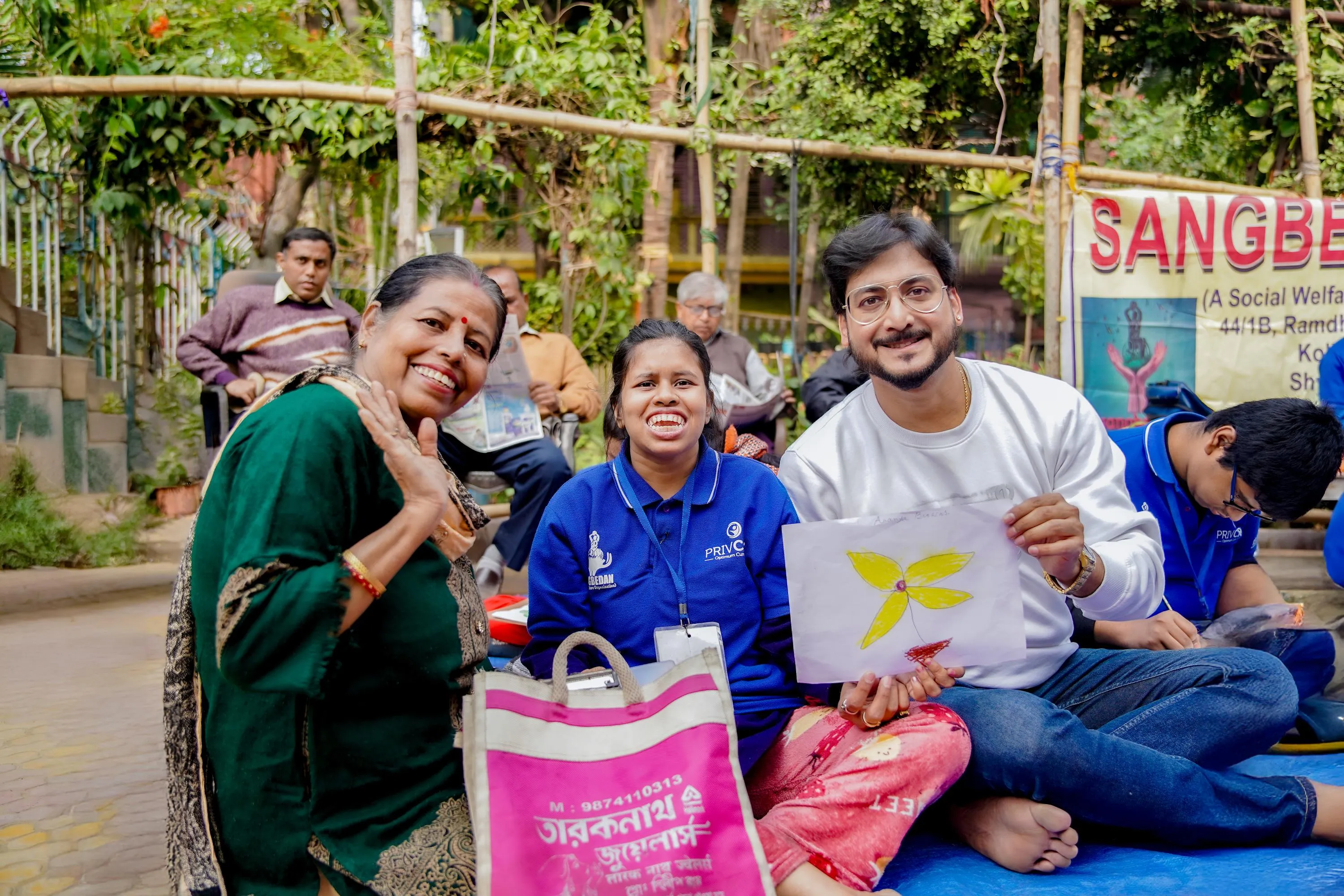
In some of our camps, the focus is on general health screenings: blood pressure measurement, basic blood sugar testing, assessment of respiratory issues, and treatment of skin infections caused by prolonged exposure to dirty water and damp clothing. In others, our disaster relief NGO Sundarban teams prioritise mothers and children, checking nutritional status, giving iron and vitamin supplements, and offering advice on safe infant feeding during water contamination. Eye checkup camps are also a vital part of this continuum. Fisherfolk, honey collectors, and forest workers often suffer from eye strain, infections, and injuries made worse by harsh working environments. By holding specialised eye camps in the Sundarbans as part of our disaster relief NGO Sundarban programme, we identify individuals who need spectacles or further treatment and provide free glasses where possible, restoring the clarity they need to work and live with dignity.
These medical interventions turn our disaster relief NGO Sundarban work into more than just crisis management; they become bridges towards long‑term resilience. When a community sees that Nabatara Foundation is still present months after a cyclone, checking blood pressure, distributing medicines, or fitting spectacles, they begin to trust that support is not conditional on drama. For donors and volunteers, this is one of the most compelling aspects of working with our disaster relief NGO Sundarban programme: you are backing efforts that stay, not just show up for a photo and vanish.
Counselling Sessions and Hygiene Awareness: Healing Beyond the Body
Disasters do not only break houses; they break hearts and minds. People who have watched their roofs fly off, their livestock drown, or their crops rot under saltwater carry hidden trauma long after physical wounds have healed. Our disaster relief NGO Sundarban initiative takes mental health seriously, weaving basic counselling and emotional first aid into our camps. Trained staff and sensitive volunteers spend time listening to survivors, encouraging them to share their fears, their grief, and their plans. Even simple group conversations under a temporary tarpaulin can act as informal counselling sessions, reminding people that they are not alone and that the disaster relief NGO Sundarban team is there to walk alongside them.
Hygiene awareness is another non‑negotiable element of our programme. After a cyclone or flood, contaminated water, open defecation, and overcrowded shelters combine into perfect breeding grounds for diarrhoeal diseases, skin infections, and respiratory illnesses. In our disaster relief NGO Sundarban camps, we therefore hold hygiene awareness sessions that are practical and culturally grounded. Volunteers demonstrate correct handwashing techniques, safe storage of drinking water, proper use of bleaching powder in ponds and wells, and simple home‑based oral rehydration solutions. Families receive hygiene kits with soap, sanitary pads, and sometimes water purification tablets to translate knowledge into daily practice.
These sessions are particularly empowering for women and adolescent girls, who often bear the brunt of household sanitation responsibilities but rarely receive formal guidance. Our disaster relief NGO Sundarban programme creates safe spaces for them to ask questions, discuss menstrual hygiene, and share local coping strategies. Over time, these engagements reduce disease burdens in targeted villages and foster a sense of agency in communities that are otherwise constantly battered by forces beyond their control. Donors supporting our disaster relief NGO Sundarban work are thus helping not just with emergency aid, but with preventive measures that quietly save lives long after the last cyclone of the season.
MCA Registration and Trust: Why Donors Choose Our Disaster Relief NGO Sundarban Programme
In the world of disaster response, trust is everything. Donors and volunteers want to be sure that when they support a disaster relief NGO Sundarban, their contributions genuinely reach those in need rather than getting lost in inefficiency or mismanagement. Nabatara Foundation is registered under the Ministry of Corporate Affairs (MCA), Government of India, which means we operate within a strict legal and financial framework. This MCA registration signals that our disaster relief NGO Sundarban initiative is anchored in transparency, audited finances, and accountable governance—not in ad‑hoc charity that flares up in crises and disappears without a trace.
Our reports and communication regularly reflect what we have done on the ground: number of families reached during winter relief in the Sundarbans, quantities of blankets and food kits distributed, number of elders and children treated by doctors, reductions in seasonal illnesses in targeted villages. When you support our disaster relief NGO Sundarban programme, you can see that your donation turned into something concrete—blankets over shivering children, food in empty kitchens, medicines in the hands of a village doctor, or a counselling conversation that helped a widow find her feet again. For corporate partners, foundations, and institutional donors, this level of clarity is crucial when choosing a disaster relief NGO Sundarban partner.
Real Stories from the Delta: How Disaster Relief NGO Sundarban Work Changes Lives
Stories from the ground are the most honest mirrors of our disaster relief NGO Sundarban impact. In one winter campaign, our team delivered 2,500 blankets and 1,000 food kits to mangrove‑edge villages where temperatures had fallen below five degrees and families had no way to keep warm. Elders who would have shivered through the night under thin sheets found themselves wrapped in thick blankets, children slept better, and parents could return to daily wage work without the constant fear of sickness caused by cold. Doctors accompanying the camp treated over 500 elders and children, giving vitamin supplements and anti‑flu vaccines that cut seasonal illnesses by nearly 40 percent in the focused pockets.
In another initiative, during post‑cyclone rehabilitation, our disaster relief NGO Sundarban volunteers distributed dry rations and medical supplies in villages where saline water had destroyed ponds and fields. Partnering with local groups, Nabatara Foundation helped restore ponds and distribute bleaching powder, directly addressing one of the biggest post‑flood challenges: access to safe water. Women tell us how, before that, they had no choice but to use contaminated sources, leading to frequent stomach illnesses in children. Now, thanks to the combined effect of pond restoration and hygiene awareness sessions from our disaster relief NGO Sundarban programme, those ailments have reduced and families feel less afraid each time dark clouds gather on the horizon.
Why Global Donors and Volunteers Should Stand with a Disaster Relief NGO Sundarban
For donors and volunteers around the world, the Sundarbans may seem like a distant, almost mythic landscape of mangrove forests and Bengal tigers. But beneath that postcard image lies a daily struggle for survival against forces of nature that grow more aggressive with each passing year. Supporting a disaster relief NGO Sundarban like Nabatara Foundation – Save The Soul is one of the most direct ways to turn concern about climate change and inequality into concrete action. When you donate, you are not just giving food and medicines; you are strengthening the capacity of an under‑resourced region to withstand and recover from shocks that will only intensify in the coming decades.
Most importantly, supporting our disaster relief NGO Sundarban programme means reinforcing the idea that the people of the Sundarbans are not alone in their battle against the climate emergency. Each blanket, each medicine strip, each counselling session, each hygiene workshop carries a message: someone far away cares enough to act. Nabatara Foundation – Save The Soul, as an MCA‑registered, field‑tested disaster relief NGO Sundarban, offers you a credible, compassionate way to deliver that message again and again, storm after storm, season after season.